
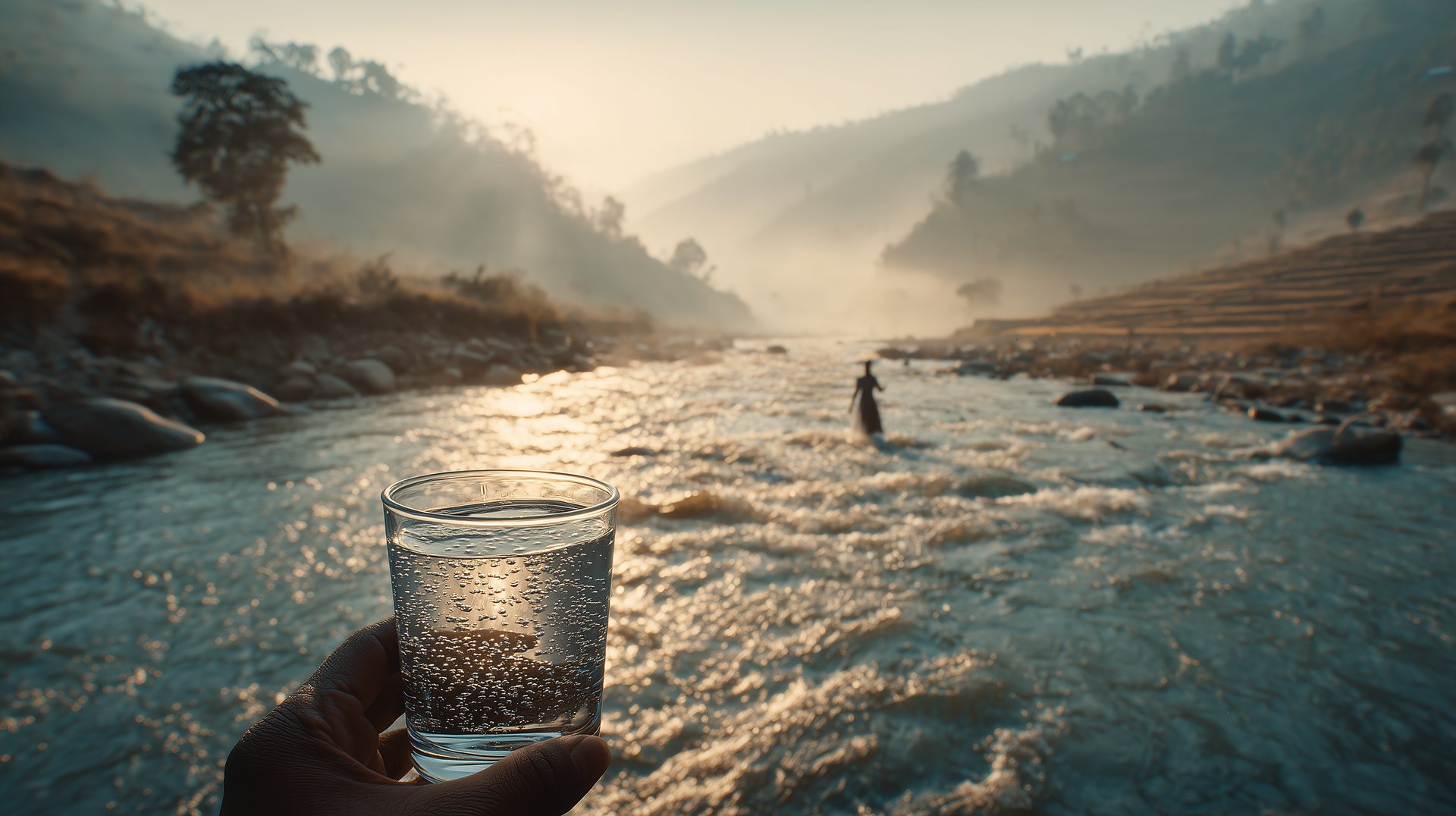
Water, once the purest expression of life, now carries a burden we cannot see. Across rivers, soil, and even the air, nanoplastics, particles so small they slip through biological barriers, are quietly accumulating in the systems that sustain us. They are not foreign invaders. They are ours. Broken down from the plastic we use, discard, and forget. Recent research has revealed something deeply unsettling. Nanoplastics are no longer just in oceans or fish. They have been found in human blood, lungs, and even in the placentas of unborn babies. What was once pollution in the environment is now becoming part of the human body.
In Nepal, rivers that descend from pristine Himalayan sources pass through towns, landfills, and unmanaged waste systems. Along the way, plastic breaks down under sunlight and friction, fragmenting into microscopic particles that enter irrigation channels and agricultural soil. Crops absorb them. Water carries them. Livestock ingest them. And eventually, so do we. This is not a distant crisis. It is intimate. It is daily. Plastic waste mismanagement, open dumping, and the absence of systemic recycling infrastructure have turned waterways into silent conveyors of contamination. Unlike visible pollution, nanoplastics offer no warning. There is no smell. No colour. No immediate symptom. Only a slow and steady infiltration. Scientists are still uncovering the full extent of the damage, but early findings suggest potential links to inflammation, hormonal disruption, and long-term health risks. The most troubling truth is this: we are only beginning to understand what we have already set in motion. And yet, the paradox remains. Nepal is a country of rivers. Of glacial origins. Of sacred water systems that have sustained civilizations for centuries. The problem is not the absence of clean water. It is our gradual corruption of it.
We once believed water purified everything it touched. Now, we must ask what happens when water itself is no longer pure.
The question is no longer whether plastic is harming the planet. The question is how much of it we are already carrying within us.
Between the first glass you drink in the morning
and the last one you reach for at night
millions of invisible particles have already entered your body.
Connect with us
MOOL is more than an organization—it is a growing movement of citizens, communities, educators, scientists, storytellers, entrepreneurs, and young people who believe Nepal's greatest wealth lies in the health of its rivers, forests, soil, air, and skies. If you share our conviction that a nation's future begins at its source, we invite you to connect with us. Whether you wish to volunteer, collaborate, support our initiatives, share an idea, or simply learn more, your voice and participation matter. Together, we can build a future where prosperity and nature thrive as one.
mool@mool.space
+977 9744305768