
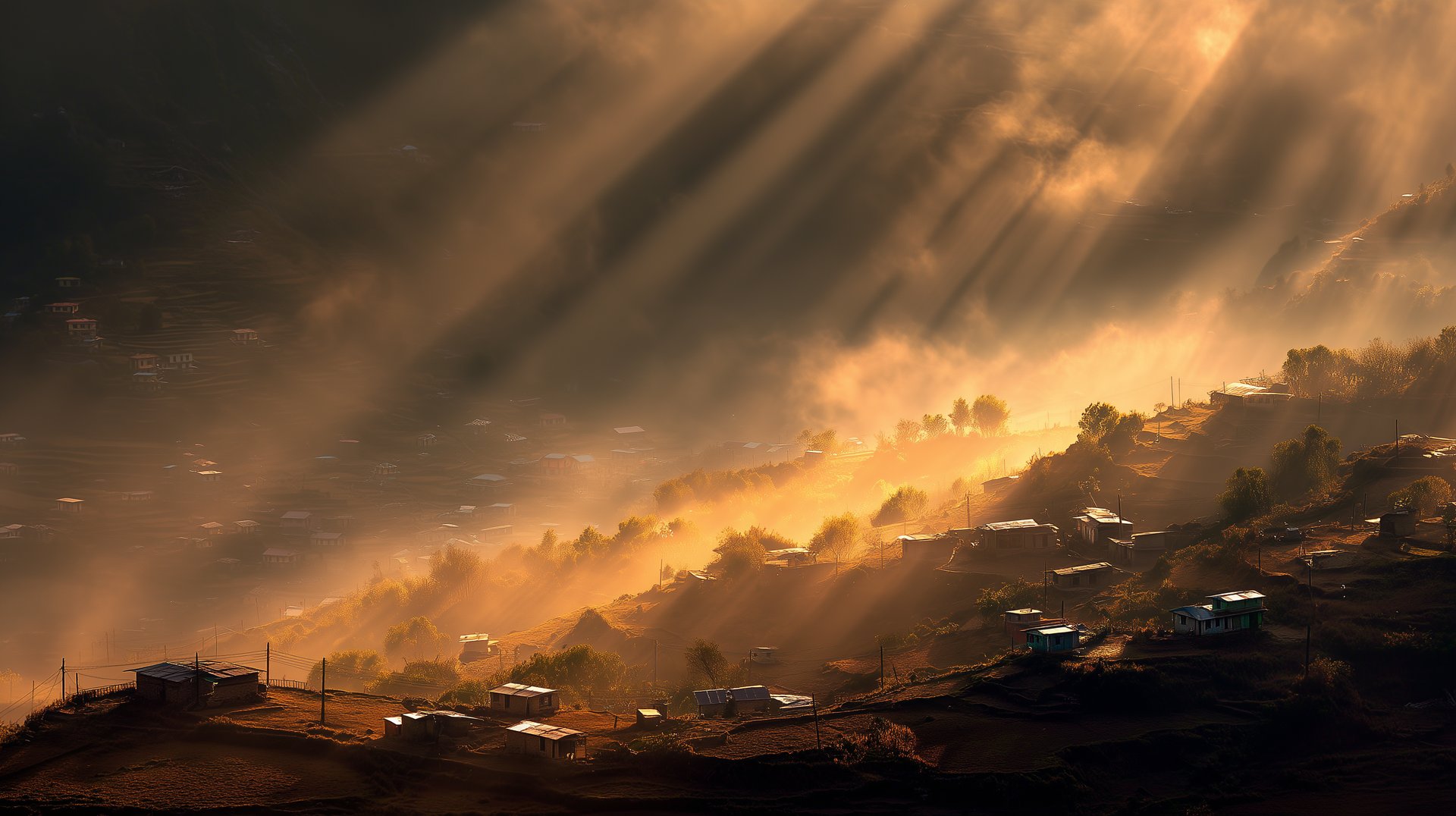
Fire, in its oldest form, was survival. It warmed us, fed us, carried us through the night. Today, that same elemental force arrives not through flame, but through sunlight, falling freely across every ridge, rooftop, and field in this country.
Nepal sits in a remarkable position. With over 300 days of sunshine in many regions and high solar irradiance across its varied terrain, it possesses one of the most underutilised energy resources in South Asia. From the plains of the Terai to the high-altitude plateaus of Mustang, sunlight is not scarce. It is abundant, predictable, and entirely ours. And yet, we continue to import energy. We continue to rely on fuels that must travel across borders, through fragile supply chains, vulnerable to geopolitical shifts and global price shocks. While the sun rises each day without invoice or interruption, we choose sources that can be turned off at someone else’s discretion.
Solar energy offers something profoundly different. It decentralises power. It places generation in the hands of households, communities, and local governments. A rooftop becomes a power plant. A village becomes self-reliant. A nation reduces its dependence not through negotiation, but through design. For a country already celebrated for its hydropower potential, solar is not a competitor. It is a companion. When rivers run low in the dry season, the sun is strongest. When demand peaks during daylight hours, solar answers immediately. Together, they form a system that is resilient, balanced, and uniquely suited to Nepal’s geography. The opportunity is not theoretical. It is immediate. Schools, farms, health posts, and small enterprises can all be powered locally. Jobs can be created in installation, maintenance, and manufacturing. Energy can shift from being a recurring cost to a long-term asset. And still, the paradox remains. We search for solutions far away while standing under one. Fire once demanded effort to create. Now, it arrives every morning without asking.
The question is no longer whether Nepal has energy.
The question is why we are not using the one source we cannot run out of.
Between the first light that touches the Himalaya
and the last glow that leaves the valley
Nepal receives more energy than it will ever need.
Connect with us
MOOL is more than an organization—it is a growing movement of citizens, communities, educators, scientists, storytellers, entrepreneurs, and young people who believe Nepal's greatest wealth lies in the health of its rivers, forests, soil, air, and skies. If you share our conviction that a nation's future begins at its source, we invite you to connect with us. Whether you wish to volunteer, collaborate, support our initiatives, share an idea, or simply learn more, your voice and participation matter. Together, we can build a future where prosperity and nature thrive as one.
mool@mool.space
+977 9744305768