
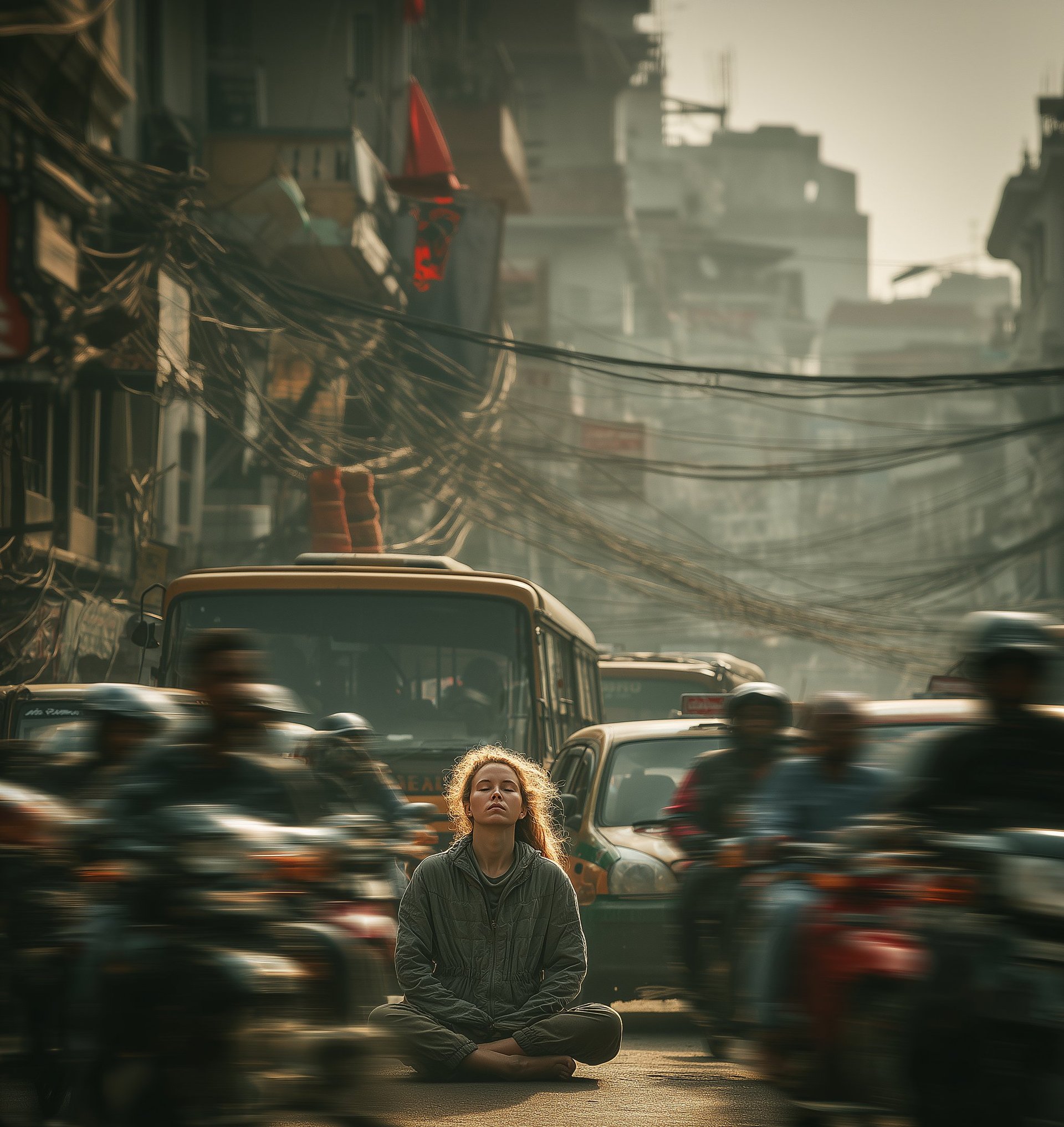
Space is not emptiness. It is presence without intrusion. It is the distance between chaos and clarity. And in a world drowning in noise, true space has become the rarest resource of all. Nepal was born with it.
In its mountains, silence is not absence. It is power. In its monasteries, stillness is not idleness. It is mastery. In its forests and high-altitude landscapes, the human mind finds something it has lost elsewhere. It slows. It listens. It begins again. And yet, in the name of progress, we are turning away from this inheritance. Across our cities and hills, concrete rises where forests once stood. High-rises stretch upward, chasing the illusion of modernity. Polluting industries creep into valleys that once carried clean air and quiet. Roads cut deeper, faster, louder, without asking what they replace. What we are building is not aligned with who we are. It is borrowed ambition, unsuited to the land that holds us.
Tourism, the one sector that could have elevated Nepal to global relevance on its own terms, is being quietly sidelined. Not because it lacks potential, but because we are diluting the very thing that makes it powerful. No one travels across the world to experience what they already have. They come for what is rare. And what is rare today is not height, or speed, or scale. It is space.
The modern world is exhausted. Burnout, anxiety, and disconnection are no longer exceptions. They are the norm. People are searching not for more stimulation, but for less. Not for spectacle, but for stillness. The global wellness economy is expanding rapidly, yet most of it is an imitation, an attempt to recreate what Nepal already embodies without trying. Here, meditation is not a service. It is a tradition. Mindfulness is not a product. It is a way of being. The silence of Mustang, the rhythm of monastic life, the vastness of Himalayan landscapes. These are not constructs. They are truths.
Nepal does not need to become the wellness capital of the world. It already is. But it is moving, steadily, in the opposite direction. Every forest cleared, every polluted valley, every chaotic expansion chips away at the very essence that sets Nepal apart. In trying to look like everywhere else, we risk becoming nowhere at all.
The question is no longer whether Nepal can lead the world in wellness.
The question is whether we will stop dismantling the very thing that makes it possible.
Between the noise that fills our days
and the silence we have forgotten how to hear,
we are replacing our greatest strength with our greatest mistake.
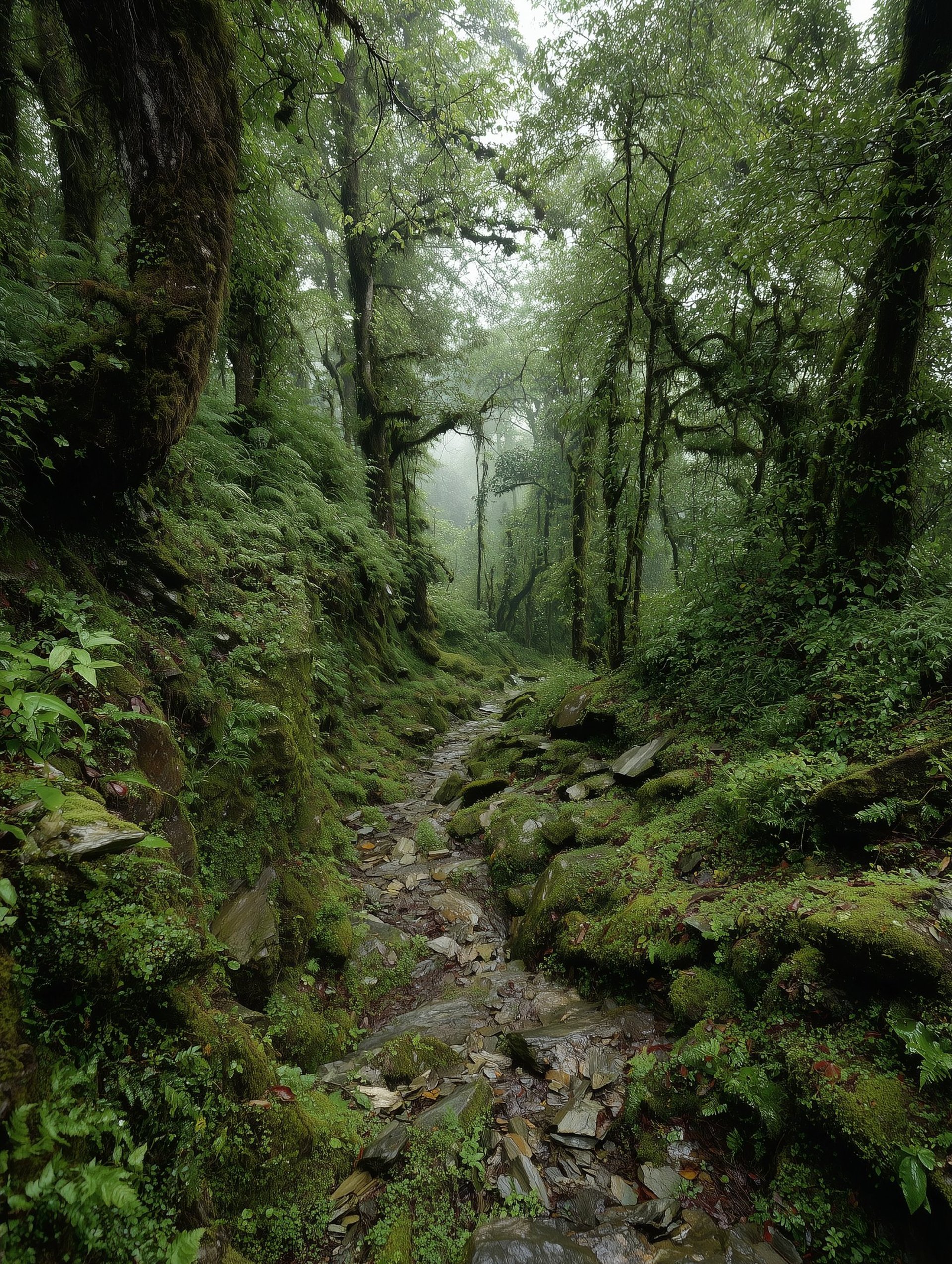
Nature is
the most powerful infrastructure Nepal already possesses.
We speak of infrastructure as though it must be poured, welded, and erected. Roads. Towers. Industrial corridors. The visible symbols of progress. But long before these, Nepal was given an infrastructure far more sophisticated, far more resilient, and far more valuable. Nature.
Forests that regulate climate and anchor soil. Rivers that power, nourish, and connect. Mountains that shape weather, store water, and command reverence. Open landscapes that offer space, silence, and restoration. This is not scenery. This is a living system, engineered over millennia, functioning without subsidy, without maintenance budgets, without failure. And yet, in the pursuit of what we call development, we are systematically dismantling it.
We cut forests that cool entire regions, only to build structures that require artificial cooling. We choke rivers that once sustained ecosystems, then invest heavily to restore what was freely given. We fill valleys with concrete and pollution, and then wonder why the air becomes unlivable. Each act replaces a self-sustaining system with one that demands constant input, constant repair, constant cost. This is not progress. It is substitution. And a poor one at that.
For a nation like Nepal, the opportunity is not to replicate the industrial pathways of others. It is to recognise that our greatest advantage lies in what cannot be easily replicated elsewhere. The world does not need another cluster of high-rises in the Himalayas. It does not need more polluting industries in fragile ecosystems. What it needs, and is increasingly willing to travel for, is what Nepal already has in abundance.
Clean air. Living forests. Flowing water. Silence. Space. This is infrastructure.
The kind that attracts global tourism, supports agriculture, sustains biodiversity, and nurtures human well-being. The kind that builds an economy without eroding the very foundation it depends on. The kind that positions Nepal not as a follower in a crowded race, but as a leader in a world searching for balance.
To dismantle this is not just an environmental loss. It is an economic miscalculation. It is a strategic failure. And most of all, it is a forgetting. The question is no longer whether Nepal needs infrastructure.
The question is why we are destroying the only kind we cannot afford to rebuild. Nature.
Connect with us
MOOL is more than an organization—it is a growing movement of citizens, communities, educators, scientists, storytellers, entrepreneurs, and young people who believe Nepal's greatest wealth lies in the health of its rivers, forests, soil, air, and skies. If you share our conviction that a nation's future begins at its source, we invite you to connect with us. Whether you wish to volunteer, collaborate, support our initiatives, share an idea, or simply learn more, your voice and participation matter. Together, we can build a future where prosperity and nature thrive as one.
mool@mool.space
+977 9744305768